
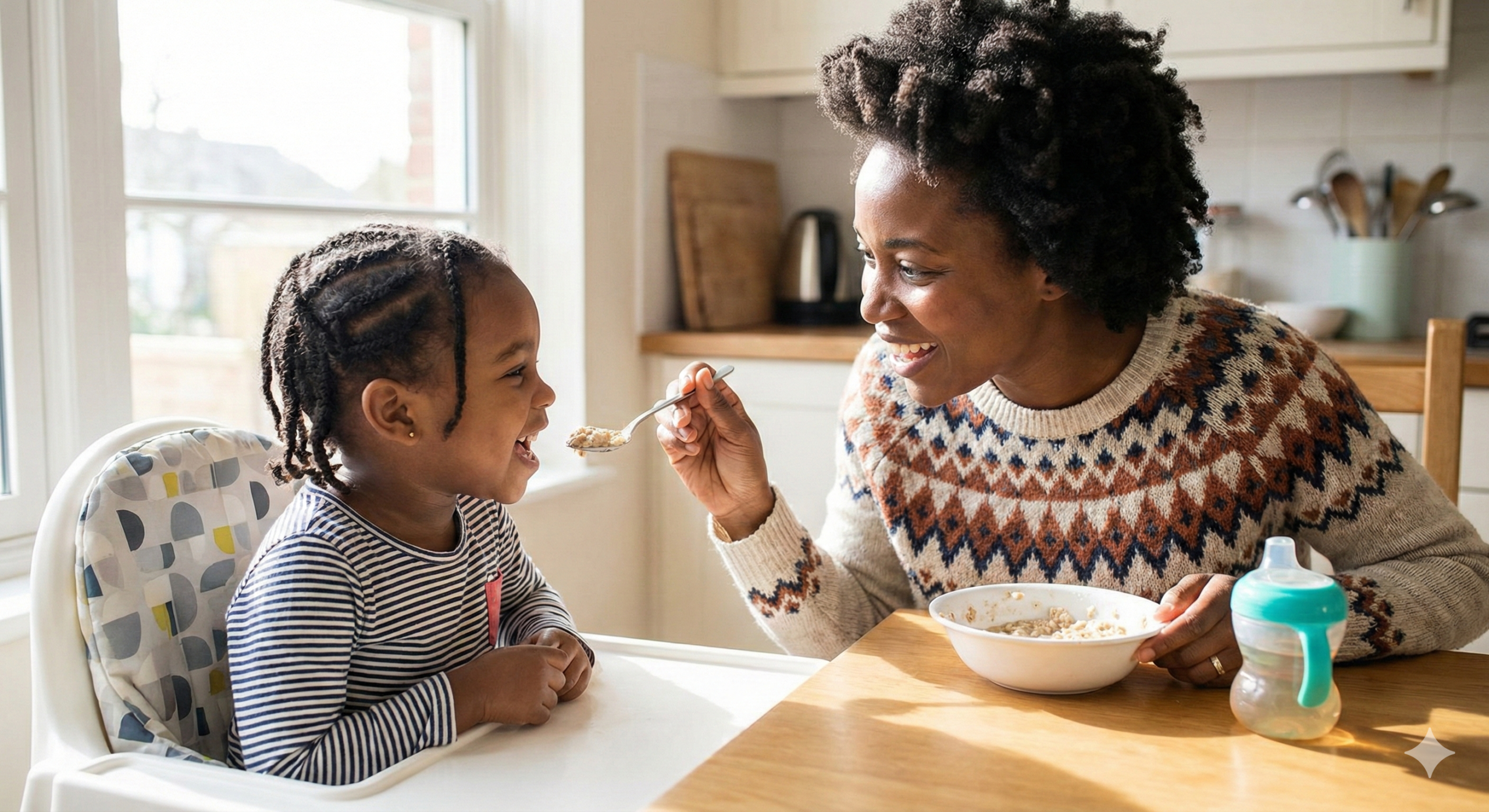
On family nutrition; if you are a parent, you know that negotiations with your mid-grader has nothing close to negotiating with a toddler who has just been served a piece of broccoli.
We all start with noble intentions. We imagine our children happily munching on kale chips and requesting quinoa for breakfast. Then reality hits. Suddenly, you realize your child’s diet consists entirely of “The Beige Food Group”: chicken nuggets, crackers, pasta with butter (no sauce, heaven forbid), and the occasional escape-meals at Tim Hortons.
But here is the thing: Food isn’t just about filling their stomachs so they stop asking for snacks every seven minutes. It’s about fuel.
In the fitness world, we obsess over “macros” and “pre-workout nutrition.” Why should our kids be any different? They are basically tiny, high-performance athletes who sprint around the living room for 12 hours straight. If we put cheap gas in a Ferrari, the engine sputters. If we fill our kids with sugar and processed junk, we get the dreaded “energy crash” (usually right before bedtime).
So, how do we pivot from “survival feeding” to healthy eating for kids that actually powers their day?
Here is your crash course in Family Nutrition 101.
1. Rebrand the “Health Food”
Marketing is everything. If you tell a six-year-old, “Eat this spinach, it’s full of iron,” they will look at you like you just asked them to do their taxes. They don’t care about iron. They care about fun.
You need to change the narrative.
* Broccoli isn’t a vegetable; it’s “Dinosaur Trees” that give you T-Rex strength.
* Smoothies aren’t full of vitamins; they are “Hulk Potions” or “Princess Power Juice.”
* Carrots are “X-Ray Vision Sticks.”
Connecting food to a superpower or a physical ability (e.g., “This helps you run faster at soccer”) works infinitely better than explaining long-term health benefits.

2. The “Fuel vs. Sludge” Conversation
As your kids get older, you can start teaching them the mechanics of healthy eating. I like to use the Car Analogy.
Explain that their body is a race car.
* Proteins and Complex Carbs (Oatmeal, Eggs, Chicken, Apples): This is “Premium Fuel.” It burns slow and steady. It makes the car go fast for a long time without stopping.
* Sugar and Processed Junk (Candy, White Bread, Soda): This is “Rocket Fuel.” It makes the car go super fast for about five minutes, but then the engine explodes, and the car falls into a ditch (i.e., the tantrum on the grocery store floor).
When my kids ask for candy, I don’t say “No, it’s bad.” I ask, “Do you want to crash later, or do you want energy to play at the park?” Put the choice in their hands.
3. Stop the “Clean Plate” Club
For generations, we were told to finish everything on our plates. From a fitness perspective, this teaches us to ignore our body’s natural hunger cues. This is how we end up overeating as adults.
If we want to promote healthy eating for kids, we need to trust their tummies.
* The Rule: You have to try everything (the “One Bite Rule”), but you don’t have to finish everything.
* The Benefit: This prevents the power struggle. If they eat the chicken and leave the peas, fine. They tried the peas. Maybe next week they’ll eat two. Progress, not perfection.
4. The “Sneaky Chef” vs. The “Sous Chef”
There are two schools of thought here.
The Macho Chef: You alone doing it all, while they stay three yards away locked in on a storybook.
The Sous Chef: Letting the kids help you cook.

While hiding veggies is great for survival (and I highly recommend blending spinach into pasta sauce because they literally cannot see it), the long-term win comes from making them the Sous Chef.
Studies show that kids are 400% more likely to eat something they helped create. Let them dump the ingredients in the bowl. Let them stir. Let them press the button on the blender. When they feel ownership over the meal, they eat it with pride rather than suspicion.
5. Lead by Example (Sorry, Mom and Dad)
This is the hardest part. You cannot preach healthy eating for kids while you are inhaling a bag of chips behind the pantry door.
Kids are hypocrite-detectors. If you want them to drink water, you have to drink water. If you want them to snack on fruit, you have to snack on fruit. You are their primary fitness influencer.
The Bottom Line: Family Nutrition is a Marathon
Changing your family’s nutrition habits won’t happen overnight. There will be days when the only thing they eat is a hot dog, and that is okay. One bad meal doesn’t ruin a diet, just like one salad doesn’t make you an Olympian.
The goal isn’t to be the perfect Instagram family with bento boxes that look like art. The goal is to raise kids who know that food is energy, that veggies aren’t the enemy, and that feeling strong feels good.
Now, go blend some spinach into a smoothie and tell them it’s “Alien Goo.” Whatever works.