
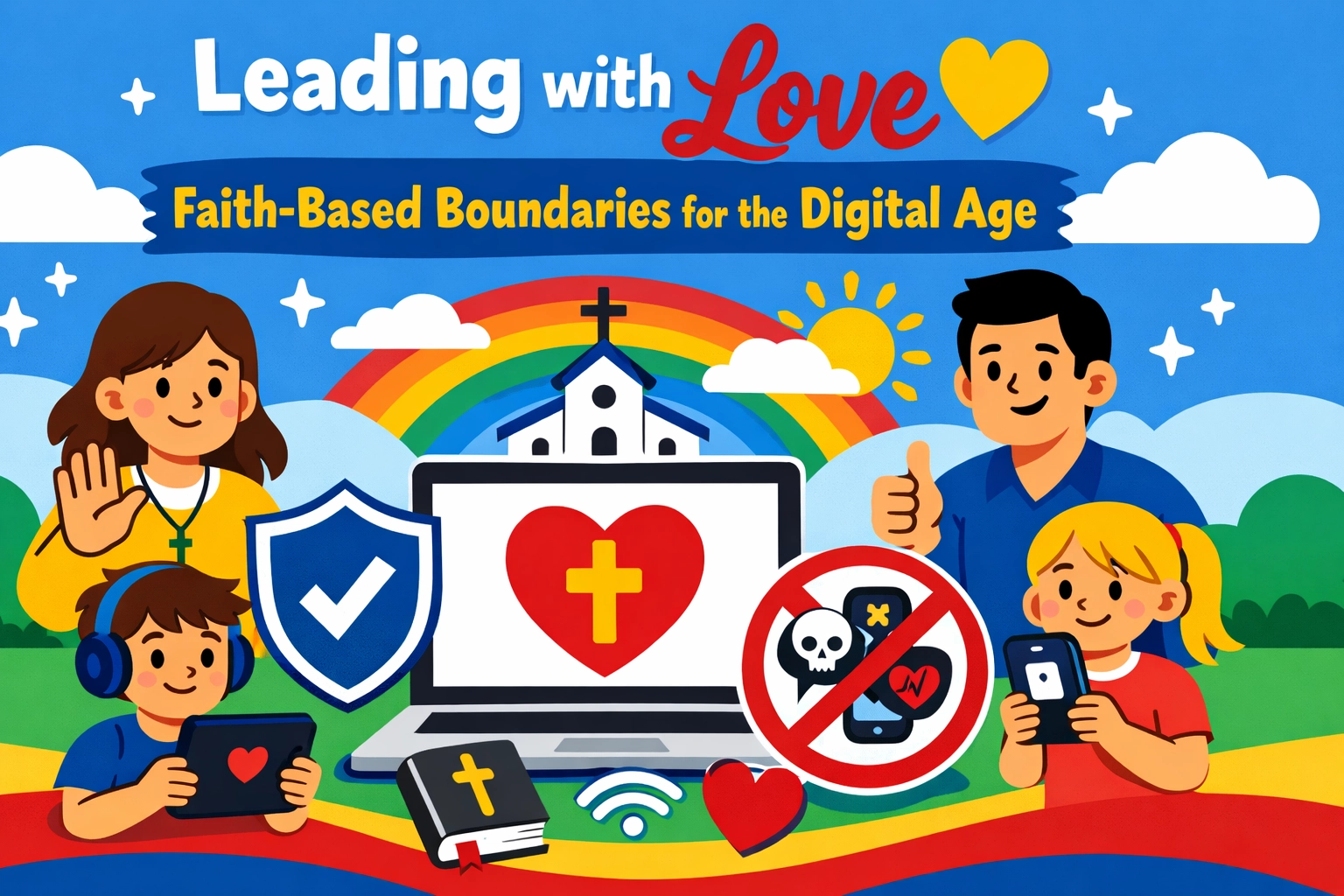
Our phones have become the fifth limb we never asked for, and it’s getting a little crowded in the family dynamic.
We’ve all been there, sitting at the dinner table, supposedly "connecting," while someone’s phone is face-up on the placemat, buzzing like a caffeinated hornet. It’s not just a distraction; it’s a spiritual leak.
As parents and leaders, we’re trying to raise kids who love God and people, but it’s hard to do that when our thumbs are perpetually busy scrolling through someone else's highlight reel. If we want to lead our families with love, we have to talk about boundaries, not the "police officer" kind of boundaries, but the "fencing in a beautiful garden" kind that keeps the good stuff in and the predators out.
Let’s dive into why this matters. We often treat our digital habits like they’re neutral, but they aren’t. Every notification is an invitation to leave the present moment and enter a digital vacuum. For those of us trying to keep our faith at the center, this constant noise can crowd out that "still, small voice" we’re actually supposed to be listening to. It’s hard to practice the presence of God when you’re practicing the presence of a thousand strangers on a social media feed.
The Idolatry of the Infinite Scroll
I know, "idolatry" sounds like a heavy-hitter word from a Sunday morning sermon, but hear me out. In Exodus, we’re warned about making things more important than God. In 2026, we don't usually bow down to golden calves; we bow down to glowing screens. If the first thing I do when I wake up is check my emails or the news instead of offering a quick "thank you" to the Big Guy upstairs, I’ve already set my priority for the day.
It’s an easy trap to fall into (I’ve been there more times than I care to admit). We think we’re just staying informed or "decompressing," but we’re actually giving our primary devotion to an algorithm designed to keep us addicted. Leading with love means recognizing when the tool has started using the craftsman.

Philippians 4:8: The Original Digital Filter
If you’re looking for a gold standard for what should be allowed on your (or your kids’) screens, you can’t beat the wisdom in Philippians. It tells us to focus on whatever is true, noble, right, pure, lovely, and admirable.
Now, let's do a quick audit of the average comment section. Is it lovely? Usually not. Is it pure? Rarely. Is it admirable? Only if you find anonymous bickering impressive.
Setting faith-based boundaries means being the "bouncer" for your mind. You don't have to let every thought or every piece of content in. If a certain app consistently leaves you feeling anxious, inadequate, or angry, that’s a sign that it’s not bearing "good fruit" in your life. It’s okay to delete it. Seriously. The world will keep spinning if you aren't up to date on the latest celebrity drama or political firestorm.
Reframing Boundaries as Invitations
One of the biggest mistakes we make as parents is presenting boundaries as a "no."
- "No phones at the table."
- "No tablets after 7 PM."
- "No, you can't have that app."
While the "no" is necessary, the "why" should be a massive "yes." We aren't saying no to technology; we’re saying yes to connection. We’re saying yes to hearing about how the math test actually went. We’re saying yes to a family board game where someone will inevitably accuse someone else of cheating (it’s a rite of passage).
Think of boundaries as an invitation to be present. When we put the devices away, we’re telling our spouses and our kids, "You are more interesting to me than anything happening on this screen." That is a powerful act of love.

Practical Strategies for the Modern Home
So, how do we actually do this without it feeling like a digital boot camp? Here are a few "sneaky" and smart ways to reclaim your space:
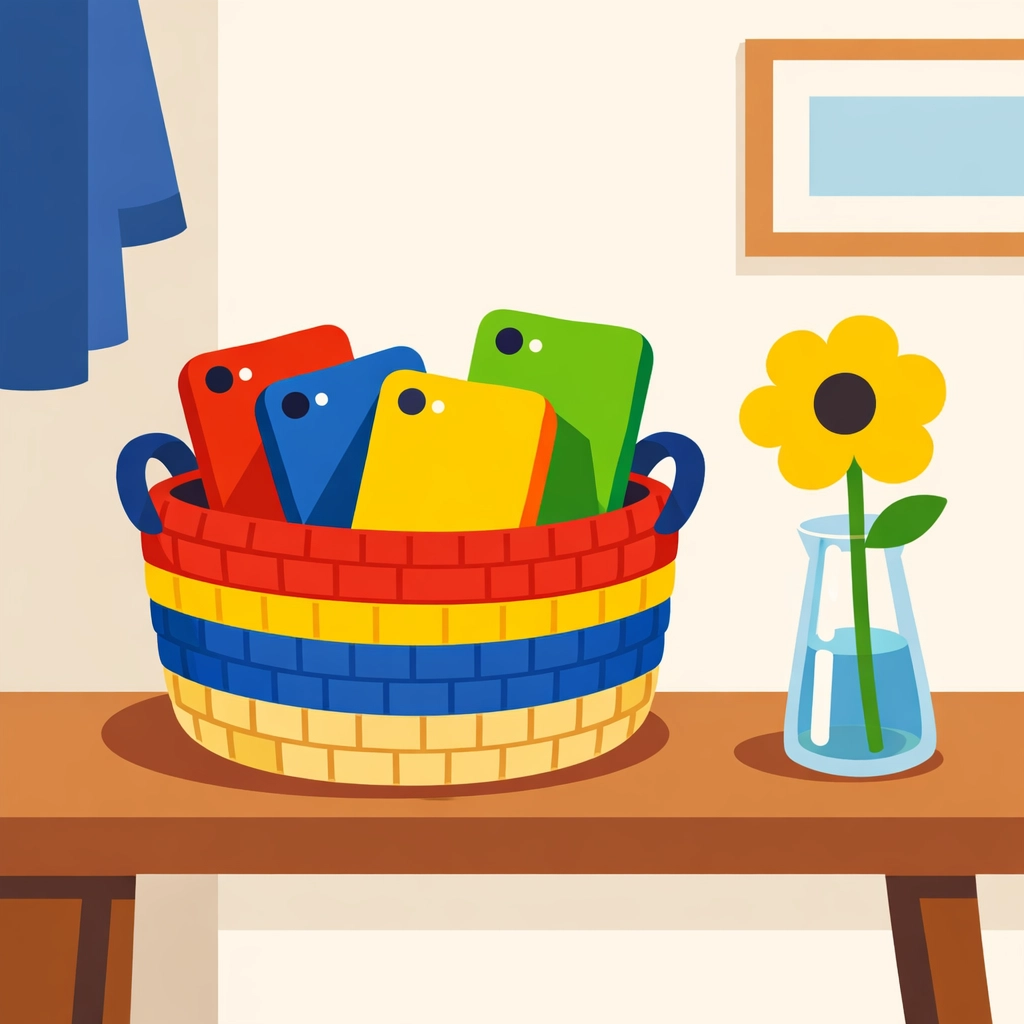
- The "Digital Sabbath": Pick one day a week: or even just a four-hour window on a Sunday: where everyone’s devices go into a literal basket. No exceptions. Go for a walk, read a physical book (remember those?), or just nap. It honors the rhythm of rest God designed for us.
- The Sacred Charging Station: Keep all chargers in a common area, like the kitchen. Phones don't go into bedrooms at night. This isn't just about avoiding "dark corners" of the internet; it’s about making sure the last thing your kids see before they sleep is a peaceful thought, not a blue-light-induced TikTok spiral.
- Model the Behavior: This is the hard part. (The struggle is real, guys.) If I tell my kids to get off their iPads while I’m hiding my phone under the table to check a sports score, I’ve lost all credibility. We have to be the ones to set the phone down first.
- Use Tools for Good: Technology isn’t the enemy; it’s the application that matters. Use apps that help your family stay connected in a healthy way. Whether it’s 3 co-parenting apps for families or just a shared digital calendar, use the tech to serve your family, not the other way around.
Guiding the Next Generation
Our kids are digital natives. They don't know a world without instant access to everything. That’s why our role isn't just to be "filter software": it’s to be mentors. We want to teach them discernment.
Instead of just banning a site, sit down with them and look at it. Ask questions: "How does this make you feel? Do you think this person is being kind? Is this true?" We want them to develop an internal "moral compass" so that when they eventually leave our house, they aren't overwhelmed by the digital noise.
We can also introduce them to content that reinforces our values. There’s some great stuff out there! For example, reading together is a massive win for family bonding. If you have younger kids, stories like The Church Rat Brothers series are a great way to talk about faith and ethics in a way that’s actually fun and engaging.
Warning Signs of Digital Imbalance
How do you know when the boundaries need a "tune-up"? Look for the red flags:
- The Secretive Swipe: If your child (or spouse) quickly hides their screen when you walk into the room, something is up.
- The Withdrawal: If they’re choosing digital interaction over physical presence consistently: skipping church, family dinner, or outdoor time.
- The Mood Shift: If taking away a device results in a full-blown theatrical production or legitimate rage, the dependency has gone too deep.
If you see these things, don’t panic. Just pivot. It’s an opportunity for a conversation, not a condemnation.

The Bottom Line
At the end of the day, leading with love means protecting the hearts of the people under our roof. The digital world is vast, loud, and often quite messy. By setting faith-based boundaries, we’re creating a sanctuary where our families can grow, breathe, and actually hear themselves think.
It won't be perfect. You’ll have days where you spend three hours on a YouTube rabbit hole about how to repair a leaky faucet (or whatever your specific brand of distraction is). But the goal isn't perfection; it’s intentionality.
Here’s to less scrolling and more soul-filling. Here’s to being present for the big moments and the "boring" ones, too. The best parts of life don't happen in 4K resolution; they happen right in front of us, in the messy, beautiful reality of our own homes.
If you're looking for more ways to strengthen your family's foundation, check out Our 5Fs philosophy to see how we balance Faith, Family, Finance, Fun, and Fitness. We’re all in this together!